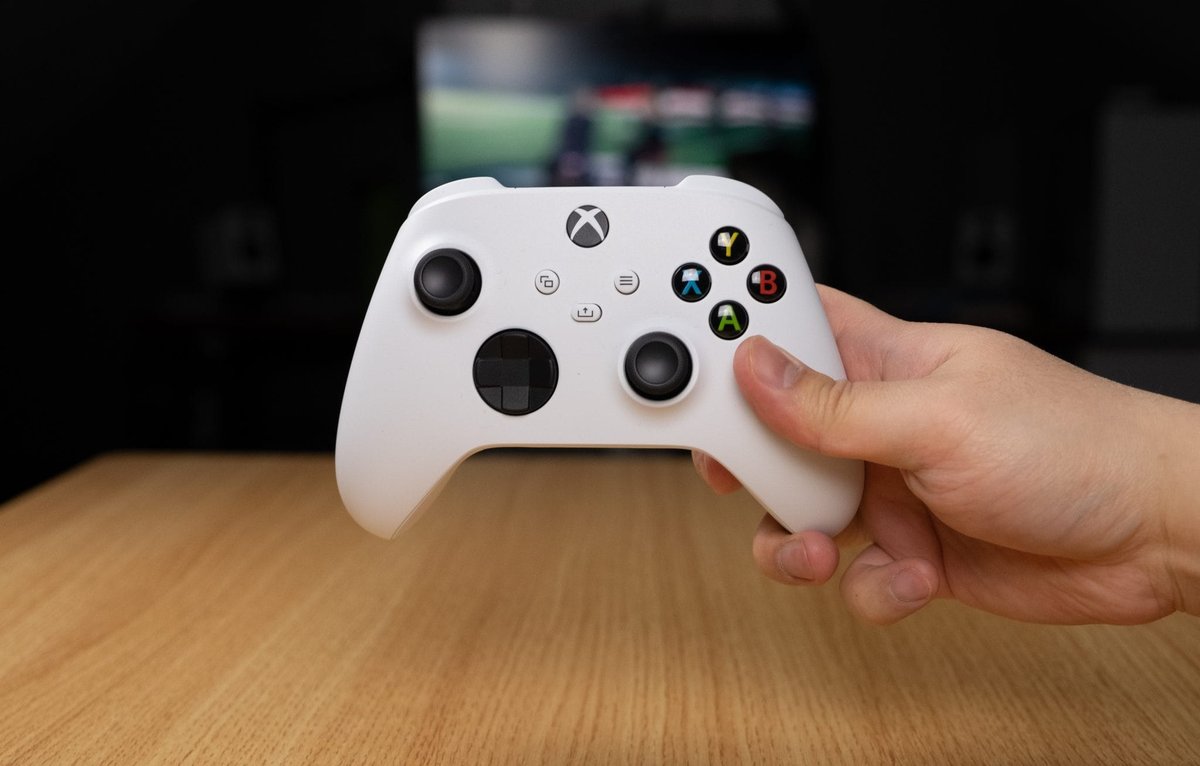
You're standing at a gaming crossroads, controller in hand, eyes scanning the horizon for your next adventure. The dilemma? Whether to dive into the established worlds of traditional consoles like the PlayStation 5 or Xbox Series X, embrace the unique charm of a Nintendo Switch, or join the burgeoning portable PC revolution spearheaded by devices like the Steam Deck and ROG Ally. The question isn't just about raw power; it's a deep dive into ecosystem, portability, price, and ultimately, which gaming experience truly speaks to you. Understanding a comparison with competitors (e.g., Steam Deck, PS5/Xbox) is crucial to making an informed decision that you won't regret.
In a world brimming with diverse gaming machines, where does Valve’s innovative handheld fit in, and is it truly outmatched by the giants or even its direct rivals? Let’s break it down.
At a Glance: Key Takeaways for Your Console Quest
- Steam Deck: Your portable PC gaming library, flexible for emulation, but with varying performance and battery life. More affordable LCD models exist.
- Nintendo Switch: Unbeatable for portability, hybrid play, and exclusive first-party titles. Less powerful, but easier to use.
- Xbox Series X/PlayStation 5: Top-tier home performance, stunning graphics, and platform exclusives. Not portable, a significant investment.
- ROG Ally (and other PC handhelds): Offers higher resolution screens and Windows 11 flexibility, often at a higher price point than Steam Deck, with a different ergonomic and software experience.
- "Better" is subjective: Your ideal console hinges on your priorities: performance, portability, game library, ease of use, or budget.
The Steam Deck: A Bold New Challenger or a Niche Player?
Since its February 2022 debut, Valve’s Steam Deck has carved out a unique space. It’s essentially a portable PC, specifically designed to let you take your entire Steam game library on the go. Imagine playing Cyberpunk 2077 on a plane or Hades during your commute. Featuring a custom AMD APU and a 7-inch touchscreen, its core appeal lies in vast game access, the freedom to run non-Steam apps or emulators, and its inherent portability.
But as with any innovative product, it doesn't exist in a vacuum. It faces formidable competition, each bringing its own strengths and weaknesses to the arena.
The Traditional Heavyweights: Steam Deck vs. Home Consoles
When we talk about the big leagues, we’re often pitting the Steam Deck against the established living room champions. This isn’t quite an apples-to-apples comparison, but it highlights the distinct trade-offs gamers face.
Steam Deck vs. Nintendo Switch: The Portable Pioneers
The Nintendo Switch (2017) practically invented the modern handheld-hybrid console category, and it remains a powerhouse in terms of sales and cultural impact. When considering a direct handheld-to-handheld comparison, the nuances are fascinating.
While the Steam Deck is more powerful thanks to its custom AMD APU, the Switch, with its Nvidia Tegra X1, truly excels in areas beyond raw horsepower. Its hybrid design, effortlessly transitioning from handheld to docked TV play, remains a marvel. More importantly, Nintendo boasts an unrivaled catalog of exclusive titles like The Legend of Zelda: Tears of the Kingdom and Super Mario Odyssey, games you simply cannot play anywhere else. The Switch also offers a budget-friendly Lite model, and its user interface is renowned for being incredibly intuitive and user-friendly, a stark contrast to the more PC-like experience of the Deck.
For a deeper dive into how these two portable powerhouses stack up, especially the newer OLED models, it's worth exploring the specifics of Steam Deck vs. Nintendo Switch OLED. If your priority is unique, polished first-party games and a seamless, family-friendly experience, the Switch holds a very strong hand.
Steam Deck vs. Xbox Series X/PlayStation 5: The Desktop Dominators
Now we're talking about a different beast entirely. The Xbox Series X and PlayStation 5 represent the pinnacle of home console gaming, designed for stunning visual fidelity, high frame rates, and immersive experiences on a big screen.
- Xbox Series X: A titan of power, the Series X offers true 4K gaming, often at 120 frames per second. Its extensive backward compatibility, cloud streaming capabilities via Xbox Game Pass, and a vast library make it a formidable option for any home gamer. What it lacks is any form of portability; this is a console built for the living room.
- PlayStation 5: Known for its blistering-fast load times thanks to a custom SSD, the PS5 also brings a compelling lineup of exclusive games like Demon's Souls and God of War: Ragnarok. Its GPU performance is exceptional, pushing 4K resolution and high frame rates, further enhanced by the immersive haptics and adaptive triggers of the DualSense controller. Like the Xbox, it's tethered to your entertainment center, and its proprietary storage expansion can be an expensive endeavor.
Comparing these consoles to the Steam Deck is like comparing a sports car to a versatile SUV. The Deck offers the freedom to play anywhere, making concessions on graphical fidelity and frame rates for a significant number of demanding titles. The PS5 and Xbox Series X offer an unparalleled graphical feast, but only within the confines of your home. Your choice here boils down to whether ultimate graphical horsepower and exclusive blockbusters at home outweigh the flexibility of portable PC gaming.
The Portable PC Arena: Steam Deck vs. Its Direct Rivals
The Steam Deck didn't just inspire traditional console comparisons; it ignited a whole new category: high-performance PC gaming handhelds. The most prominent rival in this space is the ASUS ROG Ally.
A Head-to-Head Battle: Steam Deck vs. ROG Ally
The Steam Deck and ROG Ally are both designed to bring your PC gaming library into your hands, but they approach this goal with distinct philosophies, leading to significant differences in user experience, performance, and price. For those considering which of these innovative devices to pick up, a detailed Steam Deck vs. ROG Ally breakdown is essential.
Let's look at the key battlegrounds:
- Price: This is often the first hurdle. The Steam Deck LCD (256GB SSD) is the most affordable entry point at $399.00. Valve also offers Steam Deck OLED models at $549.00 (512GB) and $649.00 (1TB), which provide a significantly upgraded display and improved battery life. Speaking of the OLED models, they represent a significant step up for Valve's handheld. Learn more about the enhancements and features by checking out What is Steam Deck OLED?. In contrast, the base ROG Ally (512GB SSD) sits at $599.99, with the more powerful Xbox Ally X (1TB SSD) jumping to $999.99. The Ally generally occupies a higher price bracket.
- Performance: The base ROG Ally (Z2 A processor) and Steam Deck models (AMD APU based on Zen 2 and RDNA2) have broadly comparable APU performance. However, real-world game performance can fluctuate based on game optimization, especially for SteamOS on the Deck. A significant advantage for the ROG Ally is its support for Variable Refresh Rate (VRR), which helps eliminate screen tearing and ensures smoother gameplay, a feature the Steam Deck currently lacks. The Ally X model, released in October 2024, is expected to push performance further.
- Display:
- Steam Deck LCD: Features a 7-inch, 1280x800 resolution screen with a 60Hz refresh rate. It's functional but can feel basic compared to newer tech.
- Steam Deck OLED: A marked improvement, offering a larger 7.4-inch display, maintaining 1280x800 resolution but bumping the refresh rate to 90Hz. Crucially, the OLED panel delivers superior color gamut, true blacks, and incredible contrast, making games pop.
- ROG Ally: This is where the Ally often shines. It boasts a 7-inch IPS touchscreen with a sharper FHD 1920x1080 resolution, a higher 120Hz refresh rate, and VRR support. The crisper detail and better motion clarity are noticeable, particularly in fast-paced games.
- Controls & Grip: The Steam Deck opts for an inline joystick layout, complemented by two haptic touchpads—a unique Valve innovation for precise mouse-like control in games not designed for controllers. Some users find its overall grip less comfortable, especially during extended sessions, due to its size and weight. The ROG Ally, on the other hand, adopts a more traditional Xbox controller-like layout with offset joysticks and often features more pronounced, ergonomic grips that many find immediately comfortable.
- Operating System: This is arguably the biggest differentiator. The Steam Deck runs on a Linux-based SteamOS, offering a highly polished, console-like interface that's deeply integrated with your Steam account. It’s designed for simplicity and ease of use, though it requires some tinkering for non-Steam games or apps. The ROG Ally runs on full Windows 11. This provides unparalleled freedom, like a laptop—direct access to all major game launchers (Xbox Game Pass, Epic Games Store, GOG, etc.) without workarounds. However, Windows 11 on a 7-inch touchscreen can be less intuitive and more complex to navigate, though the Ally offers an "Xbox full screen experience" to mimic a console menu.
- Battery Life: The Steam Deck LCD has a 40Whr battery, the OLED model upgrades to a 50Whr battery, and the ROG Ally carries a 60Whr battery (Ally X has an 80Whr battery). Despite the Ally's larger capacity, the Steam Deck OLED is often lauded for its power efficiency, frequently lasting longer in real-world gameplay (2-8 hours for Steam Deck, depending on the game; approx. 7 hours for the Ally on lighter titles, less on demanding ones). This indicates Valve's deep optimization of SteamOS and its hardware.
The Evolving Landscape of Portable PC Gaming
The competition doesn't stop with the ROG Ally. Other players are entering the fray, each aiming to refine the portable PC gaming experience. Devices like the Lenovo Legion Go and MSI Claw offer different form factors, screen sizes, and performance profiles. This burgeoning market means more choice for consumers, pushing innovation in areas like battery life, display technology, and ergonomics. If you're seriously considering this category, you'll want to stay up-to-date on the best PC gaming handhelds as new models and updates are frequent.
Beyond the Specs: Key Factors in Your Gaming Decision
Specs sheets tell one story, but your actual gaming experience involves much more. When comparing these diverse platforms, consider these critical factors:
Game Library & Exclusives
- Steam Deck: Offers access to your entire Steam PC library, which means millions of games. Compatibility varies, but Valve's "Verified" program guides you. The downside? No platform-exclusive games just for the Steam Deck (beyond PC exclusives, of course).
- Nintendo Switch: Home to some of the most critically acclaimed and unique exclusive titles in gaming (Mario, Zelda, Metroid, Animal Crossing). A major draw for many.
- PS5/Xbox Series X: Each boasts its own highly coveted exclusive titles (e.g., God of War, Spider-Man for PS5; Halo, Forza for Xbox, plus Game Pass library access).
- ROG Ally: As a Windows PC, it has access to virtually any PC game store and launcher, including Steam, Epic Games Store, GOG, and Xbox Game Pass for PC. This offers unparalleled game access but without any unique "Ally exclusives."
Portability & Form Factor
- Steam Deck & ROG Ally: Designed from the ground up for handheld PC gaming. They are chunky but manageable for on-the-go play. The Deck is heavier but more balanced.
- Nintendo Switch: The most truly portable and adaptable. Lighter, more compact, and its detachable Joy-Cons offer multi-player options anywhere.
- PS5/Xbox Series X: Strictly home consoles. While Xbox Cloud Gaming offers a portable streaming experience on phones or tablets, the consoles themselves are not portable.
User Experience & Operating System
- Steam Deck (SteamOS): Offers a refined, console-like interface focused purely on gaming. It's incredibly easy to jump into games. Linux under the hood allows for extensive customization for power users, but it can be a learning curve.
- Nintendo Switch: Known for its simple, intuitive, and family-friendly user interface. Easy for anyone to pick up and play.
- PS5/Xbox Series X: Streamlined console dashboards, designed for quick access to games, media, and social features.
- ROG Ally (Windows 11): Provides the ultimate flexibility of a full desktop OS. You can install anything, but navigating Windows on a small touchscreen with a controller can be cumbersome without specific optimizations or a mouse and keyboard. The "Xbox full screen experience" does help simplify game access.
Price & Value
- Steam Deck LCD: The most budget-friendly entry into PC gaming handhelds. The OLED models offer great value for their upgrades.
- Nintendo Switch: Affordable, especially the Lite model. Excellent value given the quality of its exclusive game library.
- PS5/Xbox Series X: Significant initial investment ($400-$500 USD), plus the cost of games (though Game Pass offers value).
- ROG Ally: Higher entry price than the Steam Deck, with the Ally X pushing into premium laptop territory. The value proposition depends on how much you leverage its Windows capabilities and higher display specs.
Accessories & Expandability
All platforms offer a range of accessories to enhance your experience.
- Steam Deck: Benefits from a vibrant aftermarket for accessories, including cases, screen protectors, and external battery packs. Valve also offers a specific Steam Deck docking station that allows you to connect it to a TV or monitor, transforming it into a desktop PC or home console. This flexibility is a huge bonus. You can learn more about official and third-party add-ons in our guide to Steam Deck accessories.
- Nintendo Switch: Offers a wide array of official and third-party controllers, docks, and travel cases.
- PS5/Xbox Series X: Primarily focuses on controllers, headsets, and storage expansion.
- ROG Ally: Also benefits from a growing accessory market and its Windows compatibility means it can leverage standard PC peripherals.
Battery Life
Often overlooked until it's too late, battery life is crucial for portable devices.
- Steam Deck: Ranges from 2-8 hours depending on the game and settings. The OLED model significantly improves on this, often outperforming the LCD version despite a larger screen.
- Nintendo Switch: Typically 4-6 hours for the standard model, with the OLED model offering slightly better efficiency.
- ROG Ally: Roughly 1-2 hours for demanding AAA titles, stretching to 4-7 hours for lighter games or streaming. The upcoming Ally X with its 80Whr battery aims to greatly improve this.
Is the Steam Deck "Outmatched"? A Nuanced Perspective
To directly answer the question posed in our title: No, the Steam Deck is not universally "outmatched." The concept of "better" is entirely subjective and depends on your specific gaming needs and priorities.
- For sheer graphical fidelity, raw power, and blockbuster exclusive titles on a big screen, the PlayStation 5 and Xbox Series X clearly win. They are built for that specific, high-end home gaming experience.
- For unparalleled portability, unique first-party game experiences, and family-friendly fun, the Nintendo Switch remains in a league of its own. Its hybrid design and stellar exclusives ensure its continued relevance.
- For a high-resolution, high-refresh-rate display and the full flexibility of Windows 11 in a handheld form factor, the ROG Ally (especially the Ally X) presents a compelling, albeit more expensive, alternative.
- For accessible portable PC gaming, a vast existing library via SteamOS, and significant modding/emulation flexibility at a compelling price point, the Steam Deck holds its ground admirably. Its OLED model, in particular, offers a fantastic blend of price, performance, and display quality.
The Steam Deck isn't trying to be an Xbox Series X in your pocket, nor is it aiming to steal the Switch's family-friendly charm. It's forging its own path as an excellent portal to your existing PC game library, emphasizing portability, open-source flexibility, and a streamlined Steam-centric experience.
Common Questions About Gaming Competitors
Let's address some frequent queries that arise when comparing these gaming titans.
Can the Steam Deck play all the same games as a PS5 or Xbox?
No. The Steam Deck plays PC games from your Steam library. While many modern AAA titles are available on both PC and consoles, console-exclusive games (e.g., God of War: Ragnarok on PS5, The Legend of Zelda: Breath of the Wild on Switch) cannot be natively played on the Steam Deck. You can, however, stream games from your PS5 or Xbox to your Steam Deck using remote play apps, or delve into emulation for older console titles.
Is the ROG Ally more powerful than the Steam Deck?
Performance can be nuanced. On paper, the ROG Ally often boasts higher potential due to its processor and higher-resolution screen. However, real-world gaming performance is highly dependent on optimization. The Steam Deck, with its custom SteamOS, often achieves comparable or sometimes better frame rates on certain titles at its native 800p resolution, thanks to Valve's deep hardware/software integration. The Ally's higher resolution display means it's pushing more pixels, which can impact performance unless settings are reduced. The Ally X model, though, marks a significant leap.
Why would someone choose a Steam Deck over a gaming laptop?
Portability and form factor are key. A gaming laptop offers superior power, a larger screen, and full desktop functionality, but it's much larger, heavier, and often requires being plugged in for peak performance. The Steam Deck is designed for true handheld use, easily fitting into a backpack for gaming on the go, without the bulk or heat of a laptop.
Does the Nintendo Switch have better battery life than the Steam Deck?
Generally, the Nintendo Switch (especially the OLED model) tends to have more consistent, slightly longer battery life than the Steam Deck when playing games of similar graphical intensity, partly due to its less powerful hardware and optimized software. However, the Steam Deck OLED has significantly improved its battery life over the LCD model and can compete closely in certain scenarios.
Choosing Your Champion: How to Decide Which Console is Right for You
Ultimately, the "best" gaming device isn't about benchmarks; it's about what fits into your life, your budget, and your gaming habits.
- Prioritize Portability:
- Absolute best portability/hybrid play & exclusives: Go for the Nintendo Switch.
- Portable PC gaming freedom: Consider the Steam Deck (especially OLED) for value, or the ROG Ally for display and Windows flexibility. If you're looking for the very best portable gaming consoles, these are your top contenders.
- Prioritize Home Performance & Graphics:
- Ultimate 4K/high FPS gaming: The PlayStation 5 or Xbox Series X are your undisputed champions.
- Consider Your Existing Game Library:
- Large Steam library: The Steam Deck is a no-brainer for making those games portable.
- Game Pass subscriber (PC or Xbox): The ROG Ally offers native Windows 11 access, while the Xbox Series X is the ultimate home base.
- Nintendo fan for exclusives: The Switch is the only choice.
- Factor in Your Budget:
- Most affordable entry to handheld gaming: Nintendo Switch Lite or Steam Deck LCD.
- Mid-range PC handheld: Steam Deck OLED or ROG Ally (base model).
- Premium handheld/Max home performance: ROG Ally X or PS5/Xbox Series X.
- Think About User Experience:
- Plug-and-play simplicity: Nintendo Switch or traditional consoles.
- Console-like PC gaming: Steam Deck.
- Full PC flexibility (with some tinkering): ROG Ally.
There's no single console that wins every category, and that's the beauty of the current gaming landscape. Each competitor offers a compelling experience tailored to different preferences. By carefully weighing these factors against your own desires, you'll be well-equipped to choose the gaming champion that's perfect for you.